
When Pixels Become Friends 🎮

Introduction
Can a game controller become a lifeline? For many players, it already is.
Sofía had always felt that the world was a little too loud. Crowded rooms, small talk, and bright offices drained her energy. Making friends seemed like solving a puzzle without instructions. That changed the day she joined an online game.
At first, it was just a distraction — a way to unwind after work. But soon she discovered something surprising: through pixels and avatars, she could collaborate, communicate, and even laugh with others. Her online teammates didn’t judge her for being quiet; they celebrated her ideas. With each match, her confidence grew.
Games became more than play — they became a bridge.
What Research Reveals
Sofía’s story isn’t unique, and the science backs it up. Multiplayer and cooperative video games are increasingly recognized as spaces that can enhance social connection and reduce isolation, especially for people who find in-person interaction stressful.
A Psychology Today article highlights that online games allow players to build confidence and social bonds at their own pace (source). Similarly, a blog by JCFS notes that online play helps players develop communication skills and empathy (source).
Meanwhile, a Microsoft survey found that 84% of players with disabilities reported a positive impact on mental health thanks to gaming — a reminder that virtual communities can foster belonging and emotional resilience (source).
Broader data from the Entertainment Software Association also show that most players feel gaming helps them relieve stress and stay connected with friends and family (source).
The Psychological Benefits of Gaming
Let’s take a closer look at how gaming can strengthen the mind and heart:
🧠 Cognitive Boost
Action and strategy games often demand attention, memory, and quick decision-making. A study from the U.S. National Institutes of Health found that children who regularly played video games performed better on cognitive tasks involving impulse control and working memory (source). Other research confirms that moderate gaming can sharpen focus, spatial reasoning, and problem-solving skills (source).
🤝 Social Growth
Multiplayer games such as Mario Kart or Splatoon 3 encourage teamwork, communication, and leadership. They provide structured, low-pressure environments where players can safely practice cooperation and empathy. The Australian videogames association reports that online play can teach valuable social skills and foster friendships across barriers of distance and disability (source).
🌿 Emotional Balance
Games like Animal Crossing: New Horizons or Stardew Valley create gentle, comforting digital spaces that help reduce stress and anxiety. A European report found that 77% of players said gaming helps them relieve stress, and 70% reported lower anxiety after play sessions (source). These results show that virtual spaces can serve as genuine emotional refuges.
From Play to Healing
Video games are more than entertainment — they can be tools for emotional connection and self-discovery. For someone like Sofía, each session was not just another level cleared; it was a step toward understanding herself, managing anxiety, and feeling part of something bigger.
With moderation and mindful play, games can become refuges for the mind, helping players learn real-life skills: patience, empathy, and confidence. Still, researchers caution that excessive gaming can sometimes correlate with reduced social engagement — a reminder that balance is key (source).
🎬 Recommended Film: The Remarkable Life of Ibelin
If this connection between gaming and mental well-being resonates with you, we recommend the documentary The Remarkable Life of Ibelin. It tells the story of Mats Steen, a young Norwegian man born with a degenerative muscular disease who passed away at 25. Through his World of Warcraft avatar “Ibelin,” he built deep friendships and found meaning that transcended his physical limitations. (IMDb, GQ Feature)
Why this film matters
- It shows how online gaming can go beyond entertainment to become a genuine social lifeline.
- It challenges assumptions about isolation, revealing how belonging, purpose, and identity can thrive in digital worlds.
- It reminds us that empathy and friendship can flourish through pixels as much as in person.
Inspiration for creators
If you’re a game developer, writer, or storyteller, this film offers deep inspiration:
- Design characters whose digital identities reflect their emotional core.
- Explore how virtual friendship can shape growth and healing.
- Build worlds that offer purpose, hope, and human connection — just like they did for Mats.
🎮 Featured Game Recommendation: Porcelana
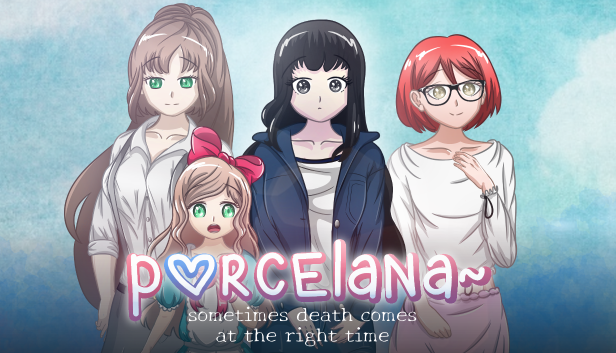
If you resonate with the themes of emotional connection, inner struggle, and meaning in digital worlds, we invite you to explore our own visual novel, Porcelana.
What is Porcelana?
- Porcelana is a free-to-play visual novel developed and published by Pandita Studio.
- Released on January 21, 2022, it tells a sensitive, psychological tale about identity, hidden pain, and how one person’s absence can reveal how much they mattered.
- The player investigates the disappearance of Isabella, a classmate who seemed perfect on the surface, uncovering her inner struggles and past through notes and interactions.
- Porcelana supports English, Spanish (Latin America), and German languages — making it accessible to a broader audience.
- It includes multiple endings, choice effects, and mature themes such as grief, self-harm, and identity.
Why Porcelana fits this blog’s mission
- Emotional resonance: Just like the stories in this post, Porcelana explores how individuals conceal pain behind masks and how connection (even mediated by notes and memory) can be healing.
- Reflective experience: The narrative encourages players to pause, think about choices, and confront emotional complexity — matching the themes of empathy, introspection, and growth shared above.
- Accessibility & shareability: Being free-to-play lowers the barrier to trying it out; it’s an invitation to experience a meaningful story without cost.
- Community & conversation: Players often share reflections, interpretations and emotional responses in forums, creating real conversation in the digital space.
Tips for experiencing Porcelana mindfully
- Play in a calm state — the story deals with heavy themes.
- Pause and reflect after key moments: write down your thoughts or emotions.
- Don’t rush choices — part of the power comes from weighing decisions and empathy.
- Read community discussions — others’ interpretations can deepen your own.
- Balance with self-care — overload of emotional narratives can be intense; take breaks as needed.
You can check Porcelana on Steam: Porcelana on Steam
Conclusion
When we pick up a controller, we don’t just enter another world — we explore a version of ourselves. Behind every avatar is a person searching for connection, meaning, and joy. And sometimes, that search leads to something beautiful: friendships that start as pixels but grow into something profoundly real.
If you’re exploring games as spaces for growth, connection, and self-discovery, remember — it’s not just about what you play, but how you play. Play consciously, connect meaningfully, and level up in life.
References
- Psychology Today – “Video Games Are Social Spaces”
- JCFS – “How Video Games Help People Connect”
- Microsoft – “Mind Games: How Gaming Can Play a Positive Role in Mental Health”
- Entertainment Software Association – “Global Report Reveals Positive Benefits of Video Gameplay”
- NIH – “Video Gaming May Be Associated With Better Cognitive Performance in Children”
- PMC – “Video Game Play Is Positively Correlated With Well-Being”
- UNRIC – “Video Games and Mental Health: A Surprising Ally”
- PMC – “Effects of Addiction to Computer Games on Physical and Mental Health of Students”
🕹️ At Pandita Studio, we believe games are stories — not just of heroes and worlds, but of people learning to connect. Keep playing, keep growing.
Jaqueline
HR at Pandita Studio. Psychology degree. Master's degree in Education. University lecturer. Passionate about people development and well-being.